
In the competitive world of travel distribution, GDS integration remains one of the most critical technology decisions for travel agencies. Whether you’re a startup online travel agency (OTA) or an established tour operator, understanding how Global Distribution Systems work and how to integrate them effectively can mean the difference between thriving and merely surviving.
This comprehensive guide walks you through everything you need to know about travel GDS integration in 2026, from choosing the right provider to overcoming implementation challenges and maximizing your return on investment.
What is a GDS?

A Global Distribution System (GDS) is a computerized network that connects travel service providers—including airlines, hotels, car rental companies, and cruise lines—with travel agencies and booking platforms worldwide. Think of it as a massive, real-time inventory database that allows travel agents to search, compare, and book travel products from thousands of suppliers through a single access point.
The Evolution of GDS Technology
GDS platforms originated in the 1960s when American Airlines developed the Semi-Automated Business Research Environment (SABRE) to manage flight reservations. Today’s GDS systems have evolved into sophisticated, cloud-based platforms that process millions of transactions daily and handle billions of dollars in travel bookings annually.
How GDS Systems Work
When a travel agent searches for a flight on a GDS platform, here’s what happens in milliseconds:
- Query Submission: The agent enters search criteria (origin, destination, dates, passenger count)
- Network Distribution: The GDS sends this query to connected airlines simultaneously
- Real-Time Response: Airlines return available inventory, pricing, and fare rules
- Aggregation & Display: The GDS aggregates responses and displays them in a standardized format
- Booking & Ticketing: Once selected, the GDS facilitates booking, payment, and ticket issuance
This entire process happens in under 2 seconds, giving travel agents instant access to global inventory.
Key Features of Modern GDS Platforms
Today’s GDS systems offer far more than basic flight bookings:
- Multi-Product Booking: Flights, hotels, car rentals, rail, transfers, activities, and travel insurance
- Real-Time Availability: Live inventory updates every few seconds
- Dynamic Pricing: Fare changes reflected instantly based on demand
- Fare Rules Management: Detailed cancellation, change, and refund policies
- Seat Selection: Visual seat maps with real-time availability
- Ancillary Services: Baggage, meals, lounge access, and premium seating
- Queue Management: Automated alerts for schedule changes and booking issues
- Reporting & Analytics: Comprehensive booking data and performance metrics
- Multi-Currency Support: Automatic currency conversion for international bookings
Why Travel Agencies Need GDS Integration

The question isn’t whether to integrate with a GDS it’s which one and how. Here’s why GDS integration is essential for modern travel agencies:
1. Access to Global Inventory
GDS platforms provide direct connections to:
- 600+ airlines worldwide (including legacy carriers and many low-cost carriers)
- 500,000+ hotels across all major chains and independent properties
- 35,000+ car rental locations from major providers
- Rail networks including Eurostar, Amtrak, and regional carriers
- Cruise lines and ferry operators
- Travel insurance providers
Without GDS integration, you’d need individual contracts with each supplier—an impossible task for most agencies.
2. Competitive Pricing & Commission Structure
GDS systems offer:
- Wholesale rates not available through public channels
- Net fares with built-in commission structures
- Negotiated corporate rates for business travel agencies
- Dynamic pricing tools to optimize profit margins
- Price comparison across multiple suppliers instantly
The average travel agency earns 8-12% commission on GDS bookings, with higher margins possible on hotels and car rentals.
3. Operational Efficiency
Manual booking processes are time-consuming and error-prone. GDS integration delivers:
- 80% reduction in booking time (from 15 minutes to 3 minutes per reservation)
- Automated ticketing and confirmation processes
- Centralized queue management for schedule changes and cancellations
- Single platform for all travel products
- Automated record keeping for accounting and reporting
A study by Travel Technology Europe found that agencies using GDS integration process 3x more bookings with the same staff compared to manual methods.
4. Professional Credibility
Major GDS providers require agencies to meet specific standards:
- IATA/ARC accreditation for airline bookings
- Financial security requirements
- Professional training certifications
- Quality standards compliance
This accreditation signals professionalism to suppliers and customers, opening doors to preferred partnerships and better commission rates.
5. Real-Time Data & Reporting
GDS platforms provide invaluable business intelligence:
- Booking trends analysis by destination, season, and customer type
- Revenue reports broken down by product, supplier, and agent
- Customer behavior insights for targeted marketing
- Commission tracking and reconciliation
- Compliance reports for regulatory requirements
This data helps agencies make informed decisions about marketing, staffing, and inventory focus.
6. Disaster Recovery & Business Continuity
When disruptions occur—weather delays, airline bankruptcies, or global events—GDS systems provide:
- Automated rebooking tools for schedule changes
- Alternative routing suggestions
- Instant refund processing capabilities
- Customer communication tools
- 24/7 technical support
During the COVID-19 pandemic, agencies with robust GDS integration managed 10x more refund requests than those relying on manual processes.
Top GDS Providers Compared

Three major GDS platforms dominate the global market, controlling approximately 95% of travel distribution worldwide. Understanding their strengths, weaknesses, and regional dominance helps you choose the right partner.
1. Sabre GDS
Market Share: ~35% globally
Overview: Founded by American Airlines in 1960, Sabre is the oldest and one of the most widely used GDS platforms, particularly strong in North America.
Strengths:
- Dominant in North American market (50%+ market share)
- Excellent airline content, especially US carriers
- Strong hotel inventory through partnerships with major chains
- Advanced analytics and reporting tools
- Robust API infrastructure for modern integrations
- Comprehensive training programs and certification
Weaknesses:
- Higher transaction fees compared to competitors
- Complex interface with steep learning curve
- Less competitive in Asian markets
- Legacy technology in some modules
Best For:
- Agencies focusing on North American travel
- Corporate travel management companies
- Agencies prioritizing airline bookings
- High-volume operations needing advanced reporting
Pricing Model:
- Booking fees: $2.50-$4.50 per segment
- Monthly platform fees: $50-$200
- Training costs: $500-$1,500 per agent
Major Airlines: American, Southwest (limited), United, Delta, and 400+ others
2. Amadeus GDS
Market Share: ~40% globally
Overview: A European-based GDS founded in 1987 by Air France, Iberia, Lufthansa, and SAS. Amadeus is the world’s largest GDS by transaction volume.
Strengths:
- Market leader in Europe, Africa, and Middle East
- Exceptionally strong hotel content (500,000+ properties)
- Superior rail booking capabilities (especially European rail)
- Modern, user-friendly interface
- Excellent low-cost carrier (LCC) content
- Industry-leading technology innovation
- Strong NDC (New Distribution Capability) implementation
Weaknesses:
- Smaller market share in North America
- Higher cost structure for small agencies
- Some Asian content gaps
Best For:
- European-based agencies
- Multi-product specialists (flight, hotel, rail, car)
- Agencies targeting millennial travelers
- Tech-forward operations prioritizing modern interfaces
Pricing Model:
- Booking fees: $2.00-$4.00 per segment
- Monthly fees: $75-$250
- Technology fees: Variable based on volume
Major Airlines: Lufthansa, British Airways, Air France-KLM, and 470+ carriers
3. Travelport (Apollo, Galileo, Worldspan)
Market Share: ~20% globally
Overview: Travelport operates three GDS brands—Apollo, Galileo, and Worldspan—each with regional strength. Acquired by Siris Capital Group in 2019.
Strengths:
- Strong Asia-Pacific presence (Galileo)
- Competitive pricing structure for mid-size agencies
- Excellent customer service and support
- Flexible API solutions for developers
- Comprehensive agency support programs
- Strong budget airline content
Weaknesses:
- Smaller overall market share
- Fragmented brand identity (three platforms)
- Less content in some niche markets
- Uncertainty about future consolidation
Best For:
- Cost-conscious agencies
- Asia-Pacific focused operations
- Agencies needing flexible integration options
- Mid-size operations (50-500 bookings/month)
Pricing Model:
- Booking fees: $1.75-$3.50 per segment
- Monthly fees: $40-$150
- Volume discounts available
Major Airlines: United (Apollo host), Qatar Airways, Emirates, and 400+ carriers
GDS Comparison Matrix
| Feature | Sabre | Amadeus | Travelport |
|---|---|---|---|
| Global Market Share | 35% | 40% | 20% |
| Airline Content | 400+ carriers | 470+ carriers | 400+ carriers |
| Hotel Properties | 400,000+ | 500,000+ | 350,000+ |
| Best Region | North America | Europe/MEA | Asia-Pacific |
| Technology | Legacy + Modern | Most Modern | Mixed |
| Ease of Use | Complex | User-Friendly | Moderate |
| NDC Ready | Developing | Leader | Developing |
| Cost Range | High | High | Medium |
| Training Req. | Extensive | Moderate | Moderate |
| API Quality | Excellent | Excellent | Good |
| Support | Good | Excellent | Excellent |
Emerging Players & Alternatives
While the “Big Three” dominate, several alternatives are gaining traction:
Regional GDS Platforms:
- TravelSky (China): Dominant in Chinese domestic market
- Infini (Japan): Strong in Japanese travel
- Abacus (Asia): Regional GDS for APAC market
Technology Aggregators:
- Duffel: Modern API-first aggregator
- Kiu System: Cloud-native GDS alternative
- Travelfusion: LCC aggregation specialist
Direct Connect Platforms:
- NDC Exchange: Direct airline connections
- TripStack: Hybrid GDS + direct content
These alternatives can complement traditional GDS integration, especially for specific markets or product types.
GDS Integration Methods
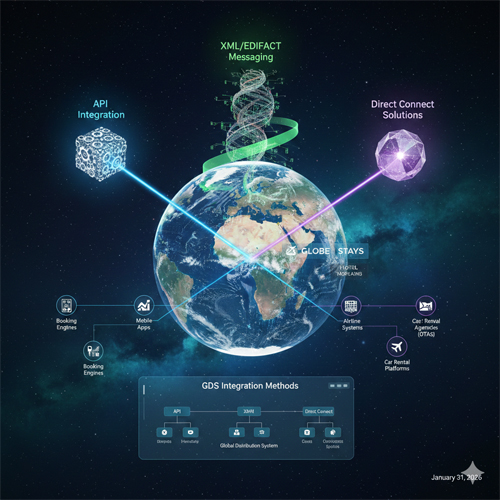
There are several ways to connect your travel agency’s booking system to GDS platforms. The right integration method depends on your technical capabilities, budget, and business requirements.
1. Direct GDS Integration (Native Connection)
What It Is: Direct API connection between your booking platform and the GDS, using the provider’s native protocol (SOAP, REST, or proprietary).
How It Works:
- Your developers use GDS-provided APIs and documentation
- Build custom middleware to translate between your system and GDS protocols
- Maintain ongoing code updates as GDS APIs evolve
- Handle authentication, session management, and error handling
Pros:
- Complete control over functionality and user experience
- No middleman fees or revenue sharing
- Direct access to all GDS features
- Customizable business logic
- Better performance (fewer hops)
Cons:
- High development costs ($50,000-$200,000+)
- Requires specialized GDS development expertise
- Lengthy implementation (6-12 months)
- Ongoing maintenance burden
- Separate integration for each GDS
- Complex certification process
Best For:
- Large agencies with in-house development teams
- OTAs with unique requirements
- Businesses with high transaction volumes (10,000+ bookings/month)
Technical Requirements:
- Experienced API developers
- GDS certification training
- Robust error handling infrastructure
- PCI DSS compliance for payment processing
- Load balancing and caching systems
2. White Label Booking Engine with GDS
What It Is: Using a pre-built booking platform that includes GDS connectivity, branded with your agency’s identity.
How It Works:
- Subscribe to a white-label platform (like SoftCloudTec)
- The platform handles all GDS connectivity and maintenance
- Customize branding, design, and select features
- Platform provider manages technical updates and certifications
Pros:
- Fast deployment (2-6 weeks)
- No development costs
- Regular feature updates included
- Multiple GDS access from one platform
- Proven, tested integration
- Technical support included
- Compliance managed by provider
Cons:
- Monthly subscription fees ($200-$2,000+)
- Less customization than direct integration
- Shared platform with other agencies
- Potential transaction fees
- Dependency on provider
Best For:
- Small to medium agencies (10-1,000 bookings/month)
- Agencies without technical teams
- Quick time-to-market requirements
- Multi-GDS access needs
- Budget-conscious operations
Typical Pricing:
- Setup: $500-$5,000
- Monthly: $200-$2,000
- Transaction fees: $0.50-$2.00 per booking (optional)
3. Middleware/Aggregator Integration
What It Is: Using an intermediary platform that aggregates multiple GDS systems into a single, simplified API.
How It Works:
- Connect to aggregator’s unified API
- Aggregator manages connections to multiple GDS platforms
- Single integration provides access to content from all major GDS
- Standardized data format simplifies development
Popular Aggregators:
- Mystifly: GDS + LCC aggregation
- TravelFusion: Specializes in low-cost carriers
- Duffel: Modern, developer-friendly API
- TBO Holidays: B2B aggregation with GDS content
Pros:
- Single API for multiple GDS
- Simplified development process
- Faster implementation than direct (2-4 months)
- Standardized data formats
- Additional content sources (LCCs, hotels)
- Reduced technical complexity
Cons:
- Additional layer increases latency
- Per-booking markup fees (1-3%)
- Less access to advanced GDS features
- Dependent on aggregator’s uptime
- Limited customization options
- May not support all GDS functionality
Best For:
- Development agencies building for clients
- OTAs wanting rapid market entry
- Businesses needing multi-GDS access quickly
- Operations prioritizing simplicity over features
Pricing:
- Setup fees: $2,000-$10,000
- Monthly minimums: $500-$2,000
- Per-booking fees: $0.75-$2.50
4. Plugin Integration (For Existing Platforms)
What It Is: Installing a GDS plugin or module into existing website platforms (WordPress, Joomla, custom CMS).
How It Works:
- Purchase/install GDS plugin for your platform
- Configure credentials and settings
- Plugin handles API calls and data display
- Updates managed by plugin developer
Popular Plugins:
- WP Travel Engine (WordPress)
- Travelpayouts (multi-platform)
- Phptravels (standalone)
Pros:
- Easy installation (hours to days)
- Low upfront cost ($100-$1,000)
- No coding required
- Regular updates provided
- Community support
Cons:
- Limited functionality compared to custom solutions
- Generic user experience
- May not support all GDS features
- Performance issues on high-traffic sites
- Security concerns with third-party plugins
- Limited customization
Best For:
- Very small agencies (< 50 bookings/month)
- Content websites adding booking functionality
- Testing GDS viability before major investment
- Niche travel blogs monetizing traffic
5. Terminal-Based Access (Legacy Method)
What It Is: Using GDS-provided terminal software installed on desktop computers.
How It Works:
- Install GDS terminal software (Sabre Red, Amadeus Selling Platform)
- Agents trained on GDS-specific command structures
- Manual entry of booking data
- No website integration
Pros:
- Full access to all GDS functionality
- No development required
- Proven, stable platform
- Strong training resources available
Cons:
- Manual process (time-consuming)
- No website booking capability
- Steep learning curve
- Not scalable
- Limited to office-based work
- Poor customer experience
Best For:
- Brick-and-mortar agencies without online presence
- Specialized corporate travel desks
- Agencies serving older demographic
- Transitional phase before web integration
Costs:
- Software licensing: $50-$150/month per terminal
- Training: $500-$1,500 per agent
- Hardware: Standard PC requirements
Integration Method Comparison
| Method | Implementation Time | Cost | Complexity | Scalability | Best For |
|---|---|---|---|---|---|
| Direct Integration | 6-12 months | $50K-$200K+ | Very High | Excellent | Large agencies |
| White Label | 2-6 weeks | $500-$5K setup | Low | Good | SMB agencies |
| Middleware | 2-4 months | $5K-$25K | Medium | Good | OTAs, developers |
| Plugin | Hours-Days | $100-$1K | Very Low | Limited | Micro agencies |
| Terminal | 1-2 weeks | $500-$2K | High (training) | Poor | Traditional agencies |
Hybrid Approaches
Many successful agencies use hybrid integration strategies:
- White label for customer bookings + terminal for complex reservations
- Middleware for primary GDS + direct integration for strategic partners
- Plugin for basic bookings + terminal for group reservations
This approach balances cost, functionality, and user experience.
Cost Analysis & Pricing Models
Understanding the total cost of ownership for GDS integration is crucial for budgeting and ROI calculation. Costs vary significantly based on integration method, transaction volume, and GDS provider.
One-Time Implementation Costs
Direct Integration Development:
- Development: $50,000-$200,000
- GDS certification: $5,000-$15,000
- Infrastructure setup: $5,000-$10,000
- Testing and QA: $10,000-$20,000
- Total: $70,000-$245,000
White Label Platform:
- Setup fee: $500-$5,000
- Customization: $1,000-$10,000 (optional)
- Training: $500-$2,000
- Total: $2,000-$17,000
Middleware Integration:
- Setup and integration: $5,000-$15,000
- API development: $10,000-$30,000
- Testing: $3,000-$8,000
- Total: $18,000-$53,000
Recurring Monthly Costs
GDS Access Fees:
- Terminal license: $50-$200 per agent
- API access: $100-$500 (volume-based)
- Platform fees: $200-$1,000
White Label Subscription:
- Basic plan: $200-$500/month
- Professional: $500-$1,500/month
- Enterprise: $1,500-$5,000/month
Middleware/Aggregator:
- Minimum monthly: $500-$2,000
- Support tier: $200-$1,000
- Infrastructure: $100-$500
Additional Services:
- Training and support: $200-$1,000/month
- Maintenance and updates: $500-$2,000/month
- Compliance and security: $100-$500/month
Per-Transaction Costs
Booking Fees (per segment):
- Sabre: $2.50-$4.50
- Amadeus: $2.00-$4.00
- Travelport: $1.75-$3.50
Middleware Markup:
- $0.75-$2.50 per booking
Payment Processing:
- 2.5-3.5% of transaction value
- $0.30 per transaction
White Label Transaction Fees (if applicable):
- $0.50-$2.00 per booking
Volume-Based Pricing Examples
Low Volume (0-100 bookings/month):
- Monthly fixed costs: $400-$800
- Per-booking costs: $3.00-$6.00
- Total monthly: $700-$1,400
Medium Volume (100-500 bookings/month):
- Monthly fixed costs: $800-$2,000
- Per-booking costs: $2.50-$4.50
- Total monthly: $1,550-$4,250
High Volume (500-2,000 bookings/month):
- Monthly fixed costs: $1,500-$4,000
- Per-booking costs: $2.00-$3.50
- Total monthly: $2,500-$11,000
Enterprise (2,000+ bookings/month):
- Negotiated fixed fees
- Volume discounts on booking fees
- Custom enterprise agreements
Hidden Costs to Consider
Training & Certification:
- Initial GDS training: $500-$1,500 per agent
- Ongoing certification renewals: $200-$500 annually
- Advanced feature training: $300-$800 per course
Compliance & Security:
- PCI DSS compliance: $2,000-$10,000 annually
- Security audits: $3,000-$15,000 annually
- Data protection measures: $1,000-$5,000 annually
Technical Support:
- Basic support: Included
- Priority support: $500-$2,000/month
- 24/7 support: $1,000-$5,000/month
Infrastructure:
- Hosting and servers: $100-$1,000/month
- Backup and disaster recovery: $200-$1,000/month
- Monitoring and maintenance: $300-$1,500/month
ROI Calculation Framework
Revenue Impact:
- Average commission per booking: $25-$150
- Bookings per month: X
- Monthly commission revenue: $25X – $150X
Cost Structure:
- Fixed monthly costs: $F
- Variable cost per booking: $V
- Total monthly cost: $F + $VX
Break-Even Analysis:
- Break-even point: When commission revenue = total costs
- Formula: ($25-$150)X = $F + $VX
Example Scenario:
- 200 bookings/month
- Average commission: $75
- Fixed costs: $1,500
- Variable costs: $3/booking
Monthly revenue: 200 × $75 = $15,000 Monthly costs: $1,500 + (200 × $3) = $2,100 Net profit: $12,900 ROI: 614%
Cost Optimization Strategies
1. Choose the Right Integration Method:
- Start with white label to test market
- Migrate to direct integration at scale (1,000+ bookings/month)
- Use middleware for multi-GDS needs
2. Negotiate Volume Discounts:
- Booking fee reductions at volume milestones
- Annual payment discounts (10-15%)
- Multi-year commitments (15-25% savings)
3. Optimize Transaction Mix:
- Focus on higher-margin products (hotels, packages)
- Minimize low-margin air-only bookings
- Cross-sell ancillary services
4. Minimize Support Costs:
- Invest in thorough initial training
- Build internal expertise
- Use self-service support resources
- Leverage community forums
5. Share Infrastructure:
- Use consortium arrangements
- Shared hosting environments
- Multi-tenant platforms
Common GDS Integration Challenges

Even with the best planning, GDS integration presents significant challenges. Understanding these obstacles and their solutions helps ensure successful implementation.
Challenge 1: Technical Complexity
The Problem: GDS APIs are notoriously complex, with:
- Thousands of data fields and codes
- Cryptic error messages
- Inconsistent data formats across providers
- Limited documentation for edge cases
- Legacy protocols (SOAP, proprietary formats)
Real-World Impact: A mid-size OTA spent 8 months developing Sabre integration but discovered their shopping cart couldn’t handle complex multi-city itineraries with open-jaw segments, requiring an additional 3 months of development.
Solutions:
- Use established middleware to abstract complexity
- Hire specialized GDS developers with proven experience
- Start with limited feature set and expand gradually
- Implement comprehensive error handling from day one
- Budget 40% more time than initial estimates
- Use sandbox environments extensively before production
Best Practice: Create a “complexity matrix” rating GDS features by implementation difficulty. Tackle low-hanging fruit first (simple roundtrip flights) before complex scenarios (multi-city with mixed classes).
Challenge 2: Data Quality & Consistency
The Problem: GDS data isn’t always clean or consistent:
- Duplicate hotel listings with different IDs
- Outdated airline schedules
- Inconsistent airport codes
- Missing or incorrect fare rules
- Image quality variations
- Conflicting availability data
Real-World Impact: A travel agency integrated hotel content from Amadeus but found 30% of hotel images were broken links or low-resolution, damaging customer confidence and reducing conversion rates by 18%.
Solutions:
- Implement data validation layers to catch errors
- Use multiple data sources and cross-reference
- Regular data audits and cleanup processes
- Build fallback mechanisms for missing data
- Cache static data (airport info, hotel addresses)
- Monitor data quality metrics continuously
Data Quality Checklist:
- Validate all location codes against standard databases
- Check image URLs before displaying
- Verify pricing logic with test bookings
- Cross-reference availability with supplier direct
- Monitor customer complaints about data accuracy
Challenge 3: Performance & Latency
The Problem: GDS searches can be slow:
- Average response time: 3-8 seconds
- Multiple searches multiply wait time
- Timeout errors during peak periods
- Network latency varies by region
- Cache invalidation challenges
Real-World Impact: An OTA experienced 45% cart abandonment when hotel searches took longer than 5 seconds. After implementing aggressive caching, abandonment dropped to 22%.
Solutions:
- Implement smart caching strategies
- Cache static data (airport codes, hotel details)
- Cache search results (30-60 seconds)
- Pre-populate common routes
- Optimize query structure
- Request only needed data fields
- Use specific search parameters
- Batch related queries
- Use asynchronous loading
- Load flights while user views search
- Progressive enhancement approach
- Background pre-fetching
- Content Delivery Network (CDN)
- Serve static content from edge locations
- Reduce server load
- Connection pooling
- Maintain persistent GDS connections
- Reduce authentication overhead
Performance Targets:
- First search result: <3 seconds
- Subsequent searches: <2 seconds
- Booking confirmation: <5 seconds
- 99.9% uptime during business hours
Challenge 4: Certification & Compliance
The Problem: GDS providers require:
- Extensive certification process (3-6 months)
- Compliance with booking protocols
- Regular audits and re-certification
- Adherence to display requirements
- Quality standards for bookings
- Financial guarantees (bonds, deposits)
Real-World Impact: A startup OTA passed technical integration but failed Sabre’s booking quality audit due to incomplete passenger data collection, delaying launch by 2 months and costing $15,000 in re-certification fees.
Solutions:
- Start certification early (before development complete)
- Assign dedicated compliance manager
- Follow GDS guidelines strictly
- Conduct internal audits before official testing
- Document all processes meticulously
- Build compliance checks into booking flow
- Maintain required financial reserves
Certification Checklist:
- Complete booking flow testing (100+ scenarios)
- Error handling validation
- Data collection compliance
- Payment security (PCI DSS)
- Booking integrity checks
- Queue management procedures
- Refund and cancellation processes
- Documentation review
- Financial security proof
Challenge 5: Cost Management
The Problem: GDS costs can spiral unpredictably:
- Per-segment fees accumulate quickly
- Failed searches still incur costs
- Booking modifications trigger additional fees
- Currency fluctuation impacts pricing
- Hidden charges emerge over time
Real-World Impact: A travel agency budget $3,000/month for GDS fees but spent $7,200 due to test environment charges, failed booking fees, and modification costs not included in original estimates.
Solutions:
- Implement cost monitoring dashboards
- Track fees by transaction type
- Alert on unusual patterns
- Forecast monthly costs
- Optimize search strategy
- Cache repeated searches
- Validate user input before querying
- Implement search throttling
- Negotiate better rates
- Volume commitments for discounts
- Annual vs monthly billing
- Bundle multiple services
- Use test environments carefully
- Limit test transactions
- Use sandbox for development
- Implement test mocking
Cost Control Best Practices:
- Set monthly budget alerts
- Review cost reports weekly
- Identify and eliminate wasteful queries
- Benchmark against industry averages
- Renegotiate contracts annually
Challenge 6: Version Updates & Maintenance
The Problem: GDS platforms constantly evolve:
- API versions deprecated with short notice
- New security requirements
- Changed data formats
- Added mandatory fields
- Performance requirement updates
Real-World Impact: Amadeus deprecated a legacy API version, giving agencies 6 months to migrate. Agencies that didn’t update lost access, forcing emergency developer hiring at 3x normal rates.
Solutions:
- Subscribe to GDS update notifications
- Maintain relationships with GDS account managers
- Build modular architecture for easier updates
- Regular version audits (quarterly)
- Budget 10-15% of development for maintenance
- Participate in beta programs for early access
- Maintain test environments with latest versions
Update Management Process:
- Monitor GDS release notes weekly
- Assess impact of announced changes
- Prioritize updates by criticality
- Test in sandbox environment
- Deploy during low-traffic windows
- Monitor for issues 24-48 hours
- Document changes for team
Challenge 7: User Experience Complexity
The Problem: GDS data presentation challenges:
- Complex fare rules difficult to simplify
- Too much information overwhelms users
- Airline restrictions confuse customers
- Multi-step booking processes
- Mobile responsiveness issues
Real-World Impact: Usability testing revealed that 67% of users couldn’t understand GDS-generated fare rules, leading to post-booking confusion and 23% increase in customer service calls.
Solutions:
- Simplify display without losing accuracy
- Use icons for restrictions
- Collapse advanced details
- Plain language summaries
- Progressive disclosure
- Improve mobile experience
- Touch-friendly interfaces
- Simplified mobile flow
- Offline capability
- Better error messages
- Translate GDS error codes
- Actionable next steps
- Contextual help
- Visual design
- Clear hierarchy
- Consistent styling
- Loading indicators
- Confidence-building elements
UX Testing Checklist:
- Test with actual users (not staff)
- Measure completion rates
- Track abandonment points
- Collect qualitative feedback
- Iterate based on data
Challenge 8: Multi-GDS Management
The Problem: Managing multiple GDS integrations:
- Different APIs and protocols
- Inconsistent data formats
- Separate certification processes
- Multiple vendor relationships
- Increased complexity and costs
Solutions:
- Use aggregator platforms for unified access
- Standardize internal data models
- Build abstraction layers to minimize code duplication
- Centralize monitoring across all GDS
- Single testing framework for all providers
SoftCloudTec’s GDS Integration Solution

At SoftCloudTec, we’ve eliminated the complexity, cost, and technical challenges of GDS integration through our comprehensive white-label travel booking platform. Here’s how we make GDS connectivity simple and affordable for agencies of all sizes.
Pre-Integrated Multi-GDS Platform
What You Get:
- All major GDS platforms ready to use: Sabre, Amadeus, and Travelport
- No development required – fully functional from day one
- Pre-certified connections that meet all GDS requirements
- Regular updates managed by our team automatically
- One unified interface for all GDS content
Your Benefits:
- Launch in 2-6 weeks vs 6-12 months for custom development
- Save $70,000-$200,000 in development costs
- Zero technical expertise required
- Focus on selling travel, not managing technology
- Scale effortlessly as your business grows
Comprehensive GDS Content Coverage
Airlines:
- 600+ global airlines across all GDS platforms
- Full-service carriers (British Airways, Emirates, Lufthansa, American)
- Low-cost carriers (Ryanair, EasyJet, Southwest)
- Regional and niche airlines
- Charter operators
Hotels:
- 500,000+ properties worldwide
- Major chains (Marriott, Hilton, IHG, Accor)
- Independent hotels and boutiques
- Vacation rentals and apartments
- Bed & breakfasts
Ground Transportation:
- 35,000+ car rental locations
- Major providers (Hertz, Avis, Enterprise, Europcar)
- Local car hire companies
- Luxury vehicle options
Additional Products:
- Rail bookings (Eurostar, Amtrak, regional networks)
- Transfer services (airport, city, private)
- Travel insurance
- Activities and tours
- Cruise packages
Advanced Booking Engine Features
Intelligent Search:
- Multi-GDS shopping – compares results from all connected GDS
- Lowest fare guarantee – automatically selects best price
- Flexible search options – ±3 days, nearby airports, alternative routes
- Smart filtering – sort by price, duration, airline, stops
- Real-time availability – up-to-the-second inventory
Dynamic Packaging:
- Combine flights + hotels + cars in single booking
- Automated package pricing with profit optimization
- Mixed supplier packages (flight from one GDS, hotel from another)
- Customizable package rules and margins
- Real-time profit calculations
B2B Sub-Agent Management:
- Create unlimited sub-agent accounts
- Custom commission structures per agent
- Real-time credit management
- Automated invoicing and reconciliation
- Agent performance dashboards
- Multi-level hierarchy support
White Label Customization:
- Full branding control (logo, colors, fonts)
- Custom domain integration (youragency.com)
- Customizable search widgets
- Flexible page layouts
- Mobile-responsive design
- Multi-language support (50+ languages)
- Multi-currency support (150+ currencies)
Built-In Compliance & Security
GDS Certification:
- Our platform is fully certified with Sabre, Amadeus, and Travelport
- Regular re-certification handled by SoftCloudTec
- Compliance monitoring and reporting included
- Automatic updates for new GDS requirements
Payment Security:
- PCI DSS Level 1 certified payment processing
- Tokenized payment storage
- 3D Secure authentication
- Fraud detection and prevention
- Multiple payment gateway integrations
- Secure customer data handling
Industry Compliance:
- GDPR compliant data protection
- IATA/ARC compatible booking processes
- UK ATOL trust account ready
- International data transfer compliance
- Regular security audits
Performance & Reliability
Speed:
- Average search response: < 3 seconds
- Cached results for popular routes
- CDN-powered content delivery
- Optimized database queries
- Asynchronous processing
Uptime:
- 99.9% availability SLA
- Redundant server architecture
- Automatic failover systems
- 24/7 monitoring
- Proactive issue detection
Scalability:
- Cloud infrastructure (AWS/Azure)
- Auto-scaling during peak periods
- Load balancing across servers
- Handles 10,000+ concurrent users
- Database optimization for millions of records
Support & Training
Onboarding:
- Dedicated implementation manager
- 2-week setup and configuration
- Customization assistance
- Initial training for 5 staff members
- Testing and quality assurance
Ongoing Support:
- 24/7 technical support via phone, email, chat
- First-hour response time guarantee
- Dedicated account manager
- Regular check-in calls (monthly)
- Priority issue resolution
Training Resources:
- Comprehensive video library (100+ tutorials)
- Written documentation and guides
- Live webinars (weekly)
- On-site training available
- Certification program
- User community forum
Flexible Pricing Models
Starter Plan – Perfect for new agencies
- 0-100 bookings/month
- Single GDS connection (your choice)
- Basic white-label branding
- Email support (24-hour response)
- £299/month + £1.50 per booking
Professional Plan – Growing agencies
- 100-500 bookings/month
- All 3 GDS platforms included
- Full white-label customization
- Sub-agent management (up to 50 agents)
- Phone + email support (4-hour response)
- £799/month + £1.00 per booking
Enterprise Plan – Established operations
- 500+ bookings/month
- Multi-GDS shopping and comparison
- Advanced dynamic packaging
- Unlimited sub-agents
- API access for custom integration
- 24/7 priority support (1-hour response)
- Dedicated success manager
- £1,999/month + £0.75 per booking
Volume Discounts:
- 1,000+ bookings: 20% reduction
- 5,000+ bookings: 30% reduction
- 10,000+ bookings: Custom enterprise pricing
No Hidden Fees:
- No setup charges
- No contract cancellation penalties
- No per-GDS access fees
- No payment processing markups
- No maintenance charges
Success Stories
Case Study: London Travel Group
- Challenge: Manual booking processes, limited inventory, high costs
- Solution: SoftCloudTec Professional Plan with Amadeus integration
- Results:
- 150% increase in bookings (first 6 months)
- 40% reduction in operating costs
- Booking time reduced from 15 min to 3 min
- Expanded to 25 sub-agents
- ROI achieved in 4 months
Case Study: Manchester Tours Ltd
- Challenge: Wanted to add flights to existing tour packages
- Solution: SoftCloudTec Enterprise with dynamic packaging
- Results:
- £2.5M additional revenue (year 1)
- 80% of customers now book flight+tour packages
- Average booking value increased by 65%
- Launched in 3 weeks
Why Choose SoftCloudTec?
Speed to Market:
- Live in 2-6 weeks vs 6+ months for custom development
- Pre-built, tested, certified platform
- Proven track record with 500+ agencies
Cost Savings:
- Save £70,000-£200,000 in development
- Predictable monthly costs
- No surprise charges
- Volume discounts available
Risk Reduction:
- No technical expertise required
- All compliance handled
- Regular updates included
- Dedicated support team
Focus on Your Business:
- We handle the technology
- You focus on customer service and sales
- Scale without technical burden
- Access latest GDS features automatically
Proven Results:
- Average 120% revenue increase (year 1)
- 28% above industry average CSAT scores
- 99.2% customer retention rate
- £500M+ bookings processed annually
Implementation Timeline
Understanding the GDS integration implementation timeline helps you plan resources, set expectations, and ensure successful deployment. Here’s what to expect for different integration approaches.
SoftCloudTec White Label Implementation (2-6 Weeks)
Week 1: Setup & Planning
- Account creation and access provisioning (Day 1-2)
- Initial configuration call with implementation manager (Day 3)
- Branding assets collection (logo, colors, domain) (Day 3-5)
- Training schedule coordination (Day 5-7)
Week 2: Configuration & Customization
- Platform customization (branding, layout) (Day 8-10)
- GDS connection activation (Day 9)
- Payment gateway integration (Day 10-12)
- Commission structure setup (Day 11-13)
- Sub-agent hierarchy configuration (Day 12-14)
Week 3-4: Testing & Training
- User acceptance testing (Day 15-21)
- Staff training sessions (Day 17-23)
- Test booking scenarios (Day 20-25)
- Mobile responsiveness verification (Day 22-26)
- Performance optimization (Day 24-28)
Week 5-6: Launch Preparation
- Final QA and bug fixes (Day 29-35)
- Marketing materials preparation (Day 30-36)
- Soft launch with limited traffic (Day 37-39)
- Full production launch (Day 40+)
- Post-launch monitoring (Day 40-45)
Go-Live: 4-6 weeks typical, 2 weeks for simple configurations
Custom Direct GDS Integration (6-12 Months)
Month 1-2: Planning & Architecture
- Requirements gathering and documentation
- GDS provider selection and contract negotiation
- Technical architecture design
- Development team assembly
- Environment setup (development, staging, production)
- GDS API access and credentials
Month 3-5: Core Development
- Search functionality development
- Booking workflow implementation
- Payment integration
- User authentication and authorization
- Database schema design and implementation
- API endpoint development
- Error handling and logging
Month 6-7: Advanced Features
- Fare rules processing
- Multi-city and complex itineraries
- Seat selection and ancillaries
- Queue management
- Booking modifications and cancellations
- Reporting and analytics
Month 8-9: Testing & Certification
- Unit testing (ongoing)
- Integration testing
- User acceptance testing
- Performance testing
- Security testing (penetration, vulnerability)
- GDS certification preparation
- Certification testing and remediation
Month 10-11: Pre-Production
- Pilot program with limited users
- Bug fixes and optimization
- Documentation completion
- Staff training
- Marketing preparation
- Final security audit
Month 12: Launch
- Soft launch (limited traffic)
- Performance monitoring
- Gradual traffic increase
- Full production launch
- Post-launch support period
Go-Live: 9-12 months typical, 6 months minimum for experienced teams
Middleware Integration (2-4 Months)
Month 1: Integration Setup
- Middleware provider selection and contract
- API access and credential provisioning
- Development environment configuration
- Integration architecture planning
- Initial API testing
Month 2: Development
- Search integration
- Booking flow implementation
- Payment processing integration
- User interface development
- Error handling
- Data mapping and transformation
Month 3: Testing & Refinement
- Functional testing
- Integration testing
- Performance optimization
- User acceptance testing
- Bug fixes
- Documentation
Month 4: Launch
- Final testing
- Staff training
- Soft launch
- Production deployment
- Post-launch monitoring
Go-Live: 3-4 months typical
Critical Success Factors
Regardless of approach, ensure:
- Clear Requirements: Document exactly what features you need
- Dedicated Resources: Assign specific team members to the project
- Regular Communication: Weekly status meetings with stakeholders
- Realistic Timeline: Add 25% buffer to all estimates
- Phased Approach: Launch with MVP, add features incrementally
- Training Plan: Begin training before launch, not after
- Support Readiness: Have customer support prepared for launch
- Marketing Coordination: Time launch with marketing campaigns
- Backup Plans: Prepare contingency for delays or issues
- Post-Launch Support: Plan for intensive monitoring first 30 days
Best Practices for Success
Implementing GDS integration successfully requires more than just technical execution. These proven best practices maximize your investment and ensure long-term success.
1. Start Small, Scale Fast
Don’t: Try to implement every feature from day one Do: Launch with core functionality and expand based on user feedback
MVP Feature Set:
- One-way and roundtrip flight search
- Simple hotel search and booking
- Basic car rental
- Standard payment processing
- Essential reporting
Phase 2 Add-Ons (after 3 months):
- Multi-city flights
- Dynamic packaging
- Seat selection
- Travel insurance
- Advanced filtering
Benefits:
- Faster time to market
- Lower initial costs
- Learn from real user behavior
- Avoid building features nobody uses
2. Invest in Comprehensive Training
GDS Platform Training:
- Allocate $1,000-$1,500 per agent for certification
- Minimum 40 hours of structured training
- Hands-on practice with real scenarios
- Regular refresher courses quarterly
Product Knowledge:
- Fare rules and restrictions
- Airline policies and procedures
- Hotel booking procedures
- Car rental terms and conditions
- Industry terminology
Software Training:
- Your booking platform specific features
- Queue management
- Reporting and analytics
- Customer service procedures
ROI of Training:
- 60% faster booking times
- 75% reduction in booking errors
- 40% decrease in customer service issues
- Higher employee confidence and satisfaction
3. Optimize for Performance
Caching Strategy:
- Cache airport/city codes indefinitely
- Cache hotel details for 24 hours
- Cache search results for 60 seconds
- Pre-populate common routes during off-peak
Query Optimization:
- Request only necessary data fields
- Use specific search parameters
- Implement smart timeouts
- Batch related queries
Infrastructure:
- Use CDN for static assets
- Implement load balancing
- Enable compression (gzip)
- Optimize database queries
- Monitor server resources continuously
Target Metrics:
- First search: < 3 seconds
- Booking completion: < 5 seconds
- Page load: < 2 seconds
- 99.9% uptime
4. Build Strong GDS Relationships
Account Management:
- Attend quarterly business reviews
- Participate in user groups and forums
- Provide feedback on platform improvements
- Stay informed on updates and changes
Negotiation Leverage:
- Consolidate bookings with fewer GDS if possible
- Commit to volume minimums for better rates
- Negotiate annual contracts for discounts
- Bundle services for better pricing
Partnership Benefits:
- Priority support access
- Beta feature testing
- Advance notice of changes
- Better commission structures
5. Focus on Data Quality
Validation Processes:
- Verify all passenger information before booking
- Validate contact details format
- Check passport expiry dates
- Confirm credit card details
- Double-check travel dates
Regular Audits:
- Weekly review of failed bookings
- Monthly data accuracy checks
- Quarterly supplier content review
- Annual comprehensive audit
Monitoring:
- Track booking error rates
- Monitor customer complaints about data
- Benchmark against industry standards
- Implement automated quality alerts
6. Create Exceptional User Experience
Simplicity:
- Minimize required fields
- Progressive disclosure (show details on demand)
- Clear progress indicators
- Intuitive navigation
Transparency:
- Show all fees upfront
- Explain restrictions clearly
- Provide fare rule summaries
- Display total price prominently
Mobile Optimization:
- Touch-friendly interface
- Simplified mobile flow
- Responsive design
- Fast mobile performance
Trust Building:
- Display security badges
- Show customer reviews
- Highlight IATA/ARC accreditation
- Provide clear contact information
- Money-back guarantees
7. Implement Robust Error Handling
User-Facing Errors:
- Translate technical GDS error codes
- Provide actionable next steps
- Offer alternative solutions
- Enable easy customer support contact
Backend Error Management:
- Comprehensive logging
- Automated error alerts
- Regular error pattern analysis
- Quick resolution procedures
Common Error Scenarios:
- Sold out inventory: Suggest alternatives
- Invalid search: Guide user to corrections
- Payment failures: Offer payment options
- System timeout: Save search and retry
8. Leverage Analytics for Growth
Key Metrics to Track:
- Conversion rate by funnel stage
- Average booking value
- Revenue per visitor
- Popular routes and destinations
- Seasonal booking patterns
- Customer acquisition cost
- Lifetime customer value
Actionable Insights:
- Identify high-margin products
- Optimize pricing strategies
- Improve low-converting pages
- Personalize marketing campaigns
- Forecast inventory needs
- Allocate marketing budget effectively
Tools:
- Google Analytics 4
- GDS reporting dashboards
- Custom business intelligence tools
- Heat mapping software (Hotjar)
- A/B testing platforms
9. Stay Compliant & Secure
Regular Compliance Checks:
- PCI DSS annual recertification
- GDPR compliance audits
- IATA/ARC standards review
- Local regulatory requirements
Security Best Practices:
- Regular security patches
- Penetration testing (annually)
- Employee security training
- Secure password policies
- Two-factor authentication
- Encrypted data transmission
- Secure data storage
Documentation:
- Maintain compliance documentation
- Document all processes
- Keep audit trails
- Regular policy reviews
10. Plan for Continuity & Disaster Recovery
Backup Systems:
- Daily automated backups
- Off-site backup storage
- Backup GDS connectivity
- Alternative payment processors
Incident Response Plan:
- Document emergency procedures
- Assign responsibility clearly
- Regular disaster recovery drills
- Communication protocols
- Customer notification procedures
Business Continuity:
- Manual booking fallback procedures
- Alternative office locations
- Remote work capabilities
- Vendor backup options
Future of GDS Technology
The GDS integration landscape is evolving rapidly. Understanding emerging trends helps you make future-proof technology decisions.
NDC (New Distribution Capability)
What Is NDC? IATA’s XML-based data standard allowing airlines to distribute rich content and ancillaries directly to travel agencies, bypassing traditional GDS limitations.
Impact on Travel Agencies:
- Access to more detailed product information
- Dynamic pricing and personalized offers
- Direct airline content delivery
- Potentially lower distribution costs
- New revenue opportunities from ancillaries
Current State:
- 40+ airlines offering NDC content
- Major GDS platforms adding NDC support
- Hybrid GDS+NDC distribution emerging
- Still evolving standards and implementations
What Agencies Should Do:
- Monitor NDC developments closely
- Choose booking platforms with NDC roadmaps
- Educate staff on NDC benefits
- Prepare for hybrid distribution models
- Don’t abandon GDS—both will coexist
AI and Machine Learning
Personalization:
- Predictive search suggestions
- Customized pricing based on user behavior
- Intelligent upselling and cross-selling
- Personalized destination recommendations
Automation:
- Automated customer service (chatbots)
- Intelligent itinerary building
- Predictive disruption management
- Automated rebooking during delays
Revenue Optimization:
- Dynamic pricing algorithms
- Demand forecasting
- Inventory optimization
- Commission maximization
Implementation Timeline: 2-5 years for mainstream adoption
Voice and Conversational Booking
Current Development:
- Voice search integration (Alexa, Google Assistant)
- Conversational booking interfaces
- Natural language processing for complex queries
- Voice-activated trip modifications
Future Applications:
- “Book me a flight to Paris next Tuesday”
- Voice-based customer service
- Hands-free booking for mobile users
- Integration with smart home devices
Implementation Timeline: 3-7 years for widespread use
Blockchain in Travel Distribution
Potential Applications:
- Transparent commission tracking
- Secure credential verification
- Distributed booking records
- Smart contract-based bookings
- Reduced fraud and chargebacks
Current State: Experimental, limited production deployments
Implementation Timeline: 5-10 years for significant adoption
Metaverse and Virtual Reality
Emerging Use Cases:
- Virtual hotel tours before booking
- Destination previews in VR
- Virtual travel agent consultations
- Immersive travel planning experiences
Implementation Timeline: 5-10+ years for mainstream adoption
What This Means for Your Agency
Short-Term (1-2 years):
- Focus on current GDS integration quality
- Ensure mobile-first approach
- Implement basic AI (chatbots, recommendations)
- Monitor NDC developments
Medium-Term (3-5 years):
- Adopt NDC-enabled platforms
- Invest in AI-powered personalization
- Explore voice booking capabilities
- Enhance mobile experiences
Long-Term (5-10 years):
- Prepare for blockchain integration
- Consider VR/AR experiences
- Embrace hybrid human-AI service models
- Stay adaptable to emerging tech
Ready to Transform Your Travel Business?

Implementing GDS integration doesn’t have to be complex, expensive, or risky. With SoftCloudTec’s white-label booking platform, you get instant access to all major GDS platforms, comprehensive features, and expert support—without the technical headaches or massive upfront investment.
What You Get with SoftCloudTec:
✅ Multi-GDS Access: Sabre, Amadeus, and Travelport pre-integrated ✅ Launch in Weeks: Not months or years ✅ Save £70K-£200K: Compared to custom development ✅ Zero Technical Expertise Required: We handle everything ✅ 24/7 Support: First-hour response guarantee ✅ Proven Platform: Processing £500M+ annually for 500+ agencies ✅ Complete Customization: Your brand, your way ✅ Risk-Free Trial: See it in action before committing
Take the Next Step:
📞 Schedule a Live Demo See our platform in action with a personalized walkthrough tailored to your agency’s specific needs. Our product specialists will show you exactly how SoftCloudTec can transform your booking operations.
📥 Download Free GDS Integration Checklist Get our comprehensive 25-point checklist covering everything you need to successfully implement GDS integration, whether you’re building custom or using a white-label solution.
💬 Speak with a GDS Expert Have questions about which GDS is right for your agency? Wondering about costs, timelines, or technical requirements? Our team of GDS integration specialists is here to help.
Call: +44 020 3500 2055 Email: info@softcloudtec.com Hours: Monday-Friday, 9:00 AM – 6:00 PM GMT
🎯 Get Custom Pricing Quote Every agency is unique. Tell us about your business, and we’ll create a customized pricing proposal with no obligation.
Join 500+ Agencies Already Thriving with SoftCloudTec
“SoftCloudTec transformed our business. We went from 50 bookings per month to over 500 in just six months. The platform is incredibly easy to use, and the support team is always there when we need them.” — Sarah Mitchell, Director, London Travel Group
“We saved over £100,000 in development costs by choosing SoftCloudTec instead of building our own system. Best decision we ever made.” — James Patterson, Founder, Manchester Tours Ltd
Frequently Asked Questions (FAQ)
What is GDS integration?
GDS integration is the process of connecting your travel booking platform to Global Distribution Systems (like Sabre, Amadeus, or Travelport) to access real-time inventory, pricing, and booking capabilities for flights, hotels, cars, and other travel products from thousands of suppliers worldwide.
How long does GDS integration take?
Implementation time varies by approach: white-label solutions like SoftCloudTec take 2-6 weeks, middleware integration requires 2-4 months, and custom direct GDS integration typically needs 6-12 months.
How much does GDS integration cost?
Costs range from £2,000-£17,000 for white-label solutions (setup + monthly subscription) to £70,000-£245,000 for custom direct integration. Monthly operating costs include GDS booking fees (£1.75-£4.50 per segment), platform fees (£200-£5,000), and transaction costs.
Which GDS should I choose?
The best GDS depends on your target market: Sabre dominates North America (35% market share), Amadeus leads in Europe/Middle East/Africa (40% market share), and Travelport is strong in Asia-Pacific (20% market share). Many agencies use multiple GDS platforms through aggregation services.
Do I need technical expertise for GDS integration?
It depends on your approach. White-label platforms like SoftCloudTec require zero technical expertise—everything is pre-built and ready to use. Custom direct integration requires experienced developers, GDS specialists, and significant technical resources.
What’s the difference between GDS and NDC?
GDS (Global Distribution System) is the traditional airline distribution model using standardized content formats. NDC (New Distribution Capability) is IATA’s newer XML-based standard allowing airlines to distribute richer content and personalized offers directly. Both currently coexist in the market.
Can small travel agencies afford GDS integration?
Yes. White-label platforms make GDS integration affordable for agencies of all sizes, with plans starting around £299/month plus per-booking fees. This is far more cost-effective than the £70,000-£200,000+ required for custom development.
How do I get certified for GDS access?
GDS providers require agencies to complete certification processes demonstrating booking quality, financial security, and compliance with standards. White-label platforms like SoftCloudTec are already certified, so you inherit their certification without going through the process yourself.
What happens if my GDS provider has an outage?
Reputable GDS platforms have 99.9%+ uptime SLAs. For critical operations, agencies often maintain backup GDS connectivity or manual booking procedures. White-label providers typically handle failover automatically across multiple GDS platforms.
Is GDS integration secure for customer data?
Yes, when implemented properly. GDS platforms and reputable white-label providers maintain PCI DSS Level 1 certification, GDPR compliance, and robust security measures. Always verify security certifications before choosing a GDS integration partner.
Conclusion
GDS integration remains the backbone of successful travel distribution in 2026. Whether you choose a comprehensive white-label solution like SoftCloudTec, invest in custom development, or take a hybrid approach, understanding the technology, costs, and best practices outlined in this guide will help you make informed decisions that drive business growth.
The travel industry continues evolving with NDC, AI, and emerging technologies, but GDS platforms will remain central to travel booking for years to come. The key is choosing an integration approach that balances your budget, timeline, technical capabilities, and growth ambitions.
Ready to take the next step? Schedule your demo today and see how SoftCloudTec can transform your travel business with seamless, affordable GDS integration.